Your Streaming History Is a Diary You Never Meant to Keep

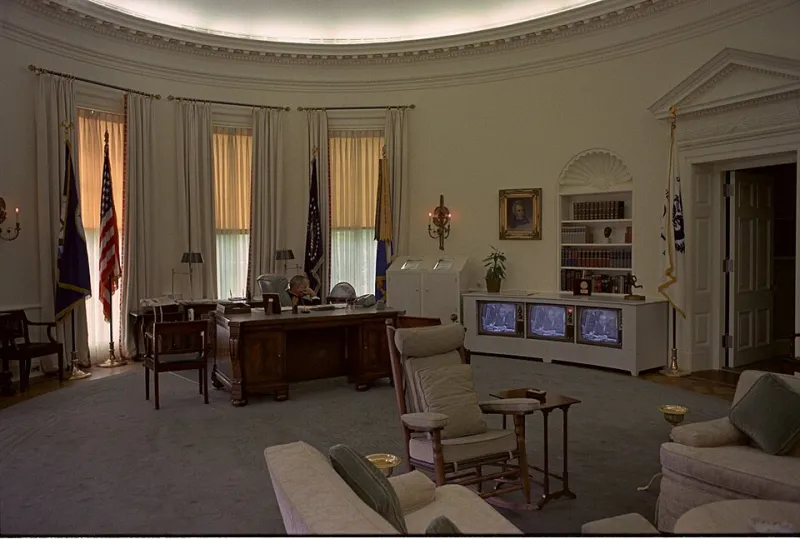
Photo: Joselodos, CC0, via Wikimedia Commons
Somewhere buried in your Netflix account, your Hulu history, your Max watchlist — there's a record. Not just of shows you watched, but of who you were when you watched them. The three-week true crime spiral of 2021. The entire run of a mid-tier British baking competition you consumed in one gray February weekend. The action franchise you revisited the month after a breakup, not because you love explosions, but because you needed to feel like something, anything, was going to be okay by the end of two hours.
Your streaming history is a diary. And unlike the journal you started in January and abandoned by February 4th, this one actually has entries.
The Breakup Binge: What Chaos Watching Tells You
Let's start with the most emotionally obvious one. Relationship ends. You're back on the couch solo. What do you reach for?
Researchers who study media psychology have found that people consistently turn to familiar, low-stakes content during periods of social pain — what some call social surrogacy, where fictional characters temporarily fill the emotional gap left by real ones. It's why you rewatched Friends or New Girl for the fourth time right after a split. Those characters weren't new to you. They were reliable. They'd never leave mid-season.
But the genre you choose during a breakup says something extra. Romantic comedies signal optimism — you still believe in the arc. Horror says you're externalizing the dread, giving the fear a face you can actually look at. And if you went full documentary binge on cults or scammers? You were probably processing feelings about trust and manipulation in a way that felt safer with a narrator.
None of this is a diagnosis. But it's worth sitting with.
The New Job Queue: Ambition Dressed in Content
Here's a pattern that shows up more than people admit: when life gets professionally chaotic — new job, big promotion, side hustle launch — binge behavior often shifts toward prestige dramas and high-stakes procedurals. Succession. The Bear. Severance. Shows about people navigating power, competence, and workplace identity.
This isn't accidental. We tend to seek out narratives that mirror our current emotional landscape, even when we think we're just relaxing. Watching characters hustle, fail, and fight for their place at the table can feel weirdly validating when you're doing the same thing IRL, badge still feeling foreign around your neck.
Alternately, some people swing hard the opposite direction — pure escapism, fantasy, comfort food TV — as a deliberate decompression valve. Both responses are valid. One is processing through reflection, the other through contrast. Your couch knows which type you are.
The Lonely Winter Spiral and What Lives There
January through March is basically the Super Bowl season for streaming services, and not just because of marketing. There's something about the cold, the short days, and the post-holiday emotional hangover that pushes people deep into their queues.
Streaming data has repeatedly shown spikes in long-form drama consumption and multi-season completions during winter months in the US. People aren't just watching more — they're committing more. Starting the seven-season show. Finally finishing the series they abandoned in October.
What does that say? A few things. Isolation, even chosen isolation, creates a kind of narrative hunger. When the external world feels small and gray, internal worlds — fictional ones — get big. Fantasy and sci-fi viewership tends to climb in winter. So does anything with a strong ensemble cast, shows that essentially simulate the feeling of being surrounded by people who care about each other.
You weren't just watching Yellowstone because it was good. You were sitting around a campfire.
Genre as Emotional Fingerprint
If you scroll back through a full year of your viewing history and map it against what was actually happening in your life, the correlation tends to be uncomfortable in the best way.
Some rough patterns worth recognizing:
- True crime binges often coincide with periods of anxiety or low-level paranoia — the brain seeking to understand threats and outcomes when real-world uncertainty feels unmanageable.
- Reality competition shows — Survivor, The Amazing Race, Top Chef — tend to spike during periods when people feel like they're competing in their own lives, or conversely, when they need to feel like an observer rather than a participant.
- Long prestige dramas show up when people have emotional bandwidth to invest. You don't start The Wire when you're running on empty.
- Comfort rewatches — returning to a show you've already seen — almost universally track to stress, grief, or transition. Familiarity is a form of safety.
None of this is a perfectly clean science. But the patterns are real enough that multiple streaming platforms have quietly built recommendation engines that factor in time of day, day of week, and even seasonal trends — because they've noticed what you reach for when.
The Shows You Never Finished Say the Most
Here's the thing nobody talks about: your abandoned queue is as revealing as your completed one.
The show you started and dropped after two episodes might mean nothing — bad pilot, wrong mood. But the show you got six episodes into and quietly stopped? That one has a story. Maybe the subject matter got too close to something real. Maybe you started it with someone who's no longer around. Maybe you hit an episode that asked something of you emotionally that you weren't ready to give.
Streaming platforms have data showing that certain episodes of certain shows have massive drop-off rates — not because the episode is bad, but because it's heavy. People ghost their own entertainment when it gets too honest.
Your unfinished list is a map of your emotional edges.
Reading Your Own History Without Judgment
The point of all this isn't to psychoanalyze yourself into paralysis or feel weird about the fact that you watched an entire cooking competition series in a weekend because your anxiety was peaking. The point is that what we choose to consume, and when, is never entirely random.
Your couch has been paying attention even when you weren't.
Next time you're scrolling and you notice yourself gravitating toward something specific — a genre, a tone, a particular kind of ending — it might be worth asking what that pull is actually about. Not to stop yourself from watching. But to understand the version of you that's doing the choosing.
Because somewhere in that watch history is a pretty honest portrait of a person navigating their life, one episode at a time. And honestly? That person has great taste.